
2-Amino-3-Hydroxypyridine CAS 16867-03-1 | Pharmaceutical Intermediate & Synthesis Building Block

CAS 16867-03-1 | 2-Amino-3-Hydroxypyridine
| CAS No: | 16867-03-1 |
| Formula: | C5H6N2O |
| EINECS: | 240-886-8 |
| Stock Availability: | In stock |
| Brand Name: | Zhishang New Materials |
| Origin: | China |
Product Details of [2-Amino-3-Hydroxypyridine]
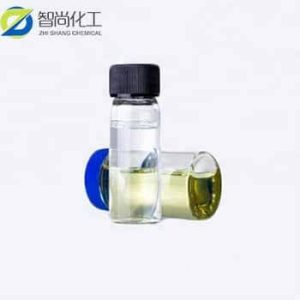
2-Amino-3-hydroxypyridine, by visual observation with the naked eye, usually appears as an off-white to light brown crystalline powder. As a classic pyridine derivative, its molecular structure is very unique: on the framework of a pyridine ring, the carbon atom at the 2-position is connected to an amino group (-NH2), and the adjacent carbon atom at the 3-position is connected to a hydroxyl group (-OH).
This “ortho dual-functional-group” structural design is not a casual work of nature, but rather endows the molecule with extremely high chemical diversity. In terms of physical properties, it has a certain melting point range (usually around 170°C, depending on the crystal form and purity), and it can dissolve in a variety of polar organic solvents, such as dimethyl sulfoxide (DMSO) and methanol, which provides convenience for its application in various liquid-phase reaction systems.
2-Amino-3-Hydroxypyridine uses
n organic synthesis strategies, the core value of 2-amino-3-hydroxypyridine lies in its versatility as an Advanced Intermediate. For chemists, constructing nitrogen-containing heterocyclic structures is often one of the most challenging steps in the synthesis route. The presence of CAS 16867-03-1 greatly simplifies this process.
By utilizing the amino group and hydroxyl group on its molecule, it can easily participate in various condensation reactions, cyclization reactions, and substitution reactions. It is an ideal precursor for building more complex fused aromatic systems (such as imidazopyridine structures, oxazolopyridine structures, etc.). In agrochemicals, high-performance polymer monomers, and fine organic synthesis fields, it is often used as a key raw material for introducing a pyridine scaffold. By using high-quality 2-amino-3-hydroxypyridine, synthesis personnel can significantly reduce reaction steps, improve atom economy, thereby reducing the overall project development cost.
Advantages of 2-Amino-3-Hydroxypyridine
The core advantage of 2-amino-3-hydroxypyridine is very direct: one pyridine ring + one amino group + one hydroxyl group. For route design, this is equivalent to providing two clear reactive entry points on the same molecule:
Starting from the amino end, common ideas include acylation, sulfonylation, formation of urea/amide derivatives, etc. (convenient for introducing side chains or protection strategies).
Starting from the hydroxyl end, etherification, esterification can be carried out, or other fragments can be connected by means of “activation first and then substitution”.
This “two-entry” feature often helps R&D teams find a better balance among yield, number of steps, raw material availability, and cost.
Related Questions:
Q1: Regarding purity, many suppliers claim 99%. What dimensions are specifically included in your testing standards?
A: This is a very professional and incisive question. In our quality system, “purity” is not just an HPLC area normalization percentage. For 2-amino-3-hydroxypyridine, our Release Specification is multidimensional:
Appearance inspection: Ensure there are no visible foreign matters to the naked eye, and the color meets the standard range, which directly reflects the degree of impurity oxidation.
HPLC purity: This is the foundation. We usually set internal control standards higher than the industry common 98%.
Loss on drying (LOD) and moisture: Pyridine compounds are prone to moisture absorption. Excessive moisture not only affects the accuracy of weighing and charging (resulting in molar ratio deviation), but may also interfere with moisture-sensitive downstream reactions. We strictly control moisture content.
NMR: We regularly perform ¹H-NMR tests to ensure the structure is correct and that there is no residual high-boiling organic solvent. The COA (Certificate of Analysis) we provide is a comprehensive physical examination report, not just a number.
Q2: This product seems to be relatively sensitive to light and air. How do you solve the stability problem during cross-border transportation?
A: Your concern is very reasonable. The phenolic hydroxyl group and amino group contained in CAS 16867-03-1 indeed make it have a certain tendency to oxidize, and the color will deepen after long-term exposure to air. To solve this problem, we have invested a lot of cost in the packaging process: We will adopt multi-layer protective packaging. The inner layer uses double-layer anti-static, UV-resistant polyethylene bags or aluminum foil bags. Before sealing, according to customer requirements or transportation duration, we will perform nitrogen filling protection or vacuum treatment to eliminate oxygen in the bag as much as possible. The outer layer uses sturdy fiber drums or high-density plastic drums, and has good light-shielding performance. In addition, in the logistics link, we will inform the carrier to avoid cargo being detained for a long time in high-temperature containers or docks under direct sunlight. For customers in extreme climate regions, we can even provide temperature-controlled transportation solutions.
Q3: We are in the early stage of R&D, and the demand is very small, but it may be scaled up to the ton level at any time. Can you cooperate with this kind of flexible demand?
A: Of course. Growing with customers is our core service philosophy. We implement a “tiered supply” strategy:
R&D stage: We have stock from tens of grams to several kilograms (Stock). Usually within 24–48 hours after receiving the order, it can be sent by international express to ensure your experiment progress is not delayed.
Pilot stage: When your demand increases to tens of kilograms or hundreds of kilograms, we will start pilot workshop production, and the delivery time is usually 2–3 weeks.
Commercial stage: For ton-level demand, we have production bases with large-scale reactors. More importantly, if you can provide an annual forecast (Forecast), we will establish an exclusive safety stock (Safety Stock) for you, ensuring that even during market fluctuations, your production line never stops.
Q4: As a global buyer, I attach great importance to compliance documents. Besides COA, what else can you provide?
A: Compliance is the cornerstone of modern chemical trade. In addition to the COA attached to each batch, we provide a full set of regulatory support documents:
MSDS/SDS (Safety Data Sheet): Compliant with the latest GHS global classification standards, including 16 complete sections, supporting multiple language versions.
ROS/TSE/BSE declaration: Proving the product does not contain restricted substances and has no animal-derived components, which is crucial for some specific application fields.
Synthesis route schematic (Flow Chart): If audit requirements are involved, under the premise of signing an NDA, we can provide a non-core-confidential synthesis process flow chart to help you evaluate supply chain risks.
Transport identification report: Whether air or sea shipment, we provide non-hazardous or dangerous goods identification reports issued by authoritative institutions to ensure smooth customs clearance.
Q5: Some suppliers in the market are 20% cheaper than you. How do you explain this price difference?
A: Price is indeed an important factor in procurement decisions, but “total cost of ownership” is more critical. Low-priced products often hide risks:
Raw material source: Cheap products may use recycled solvents or low-purity starting materials, which will introduce trace metal ions or unknown impurities, causing your downstream reaction to fail, and the loss value far exceeds the raw material price difference.
Environmental protection investment: Low price may mean the supplier cuts corners on environmental treatment, which brings huge supply interruption risks (once investigated by environmental authorities, production will be suspended).
Packaging and service: Low-cost suppliers may only use simple plastic bag packaging, resulting in the goods you receive already caked or deteriorated. Our pricing includes high-quality raw material selection, strict QA/QC system, compliant environmental treatment, and professional logistics guarantee. What we sell is not “cheap”, but “peace of mind” and “safety”.
Q6: Can we conduct on-site audits (Audit) or remote audits of you?
A: We highly welcome it. For customers seeking long-term strategic cooperation, audits are the best way to build mutual trust. Whether it is an on-site visit to the factory’s EHS (Environment, Health, Safety) facilities and storage conditions, or remote review of our ISO quality management system documents, we maintain an open attitude. Transparency is the source of our confidence. You will see our standardized production records, clean reaction workshops, and well-trained operators. Please make an appointment with our sales team one month in advance so that we can coordinate the relevant technical leaders to accompany and receive.
Q7: If I have objections to the quality of the goods received, what is your after-sales process?
A: Quality is our lifeline, but we also face possible disputes. If a quality complaint occurs:
Quick response: We will initiate an internal investigation within 24 hours after receiving the complaint and check the retained sample testing data.
Re-test mechanism: If the data of both parties are inconsistent, we support sending the sample to a third-party authoritative testing institution (such as SGS) for re-testing.
Worry-free compensation: Once confirmed to be our product quality issue, we promise unconditional return or replacement, and bear all logistics costs incurred. To avoid this situation, we strongly recommend that new customers apply for a small Pre-shipment Sample for “use-test” before placing a large order, and place bulk orders after verification.
Q8: Can you provide customized physical specifications, such as specific particle size?
A: Yes. We understand that different feeding systems have different requirements for physical properties. Standard products are usually powder, but if you use an automatic feeding system, you may need granules with better flowability; or in order to improve dissolution rate, you may need micronized products. As long as the minimum order quantity (MOQ) is met, we can adjust the crystallization process or add physical processing procedures according to your Tech Package to customize specific particle size distribution (PSD) or bulk density for you. We are not only selling standard products, but also your customized processing partner.
Q9: What efforts have your factory made in environmental protection and sustainable development?
A: This is not only a social responsibility, but also a guarantee of supply stability. Our production base is equipped with advanced wastewater treatment systems and exhaust gas absorption devices, and strictly complies with local and international environmental regulations. We are committed to “green chemistry” and continuously optimize processes to reduce solvent consumption and waste emissions. Choosing us means you choose a partner who will not suddenly disappear due to environmental inspections, and it also contributes to your company’s ESG (Environmental, Social and Governance) score.
Q10: The current international logistics situation is tense. What is the typical lead time?
A: We attach great importance to lead time management.
In-stock small orders: Usually arrange air shipment flights within 3–5 working days after payment is confirmed.
Customized / bulk sea shipment: The production cycle is usually 2–3 weeks, booking and inland transportation takes about 1 week. The sea transit time depends on the destination. We will track the status of each order in real time through the ERP system and update you weekly on the progress (WIP Report). During special holidays or port congestion, we will give early warnings and provide alternative logistics solutions (such as the China–Europe Railway Express or fast vessel services) to ensure the goods arrive as scheduled.

 API, usually referring to chemical raw materials, is the active ingredient in chemical drug formulations.
Safety Of [2-Amino-3-Hydroxypyridine CAS 16867-03-1]
| Hazard Codes | Xi,T,Xn |
| Risk Statements | 36/37/38-25-40 |
| Safety Statements | 26-45-37/39-28A-36-22 |
| RIDADR | UN2811 |
| WGK Germany | 3 |
| Hazard Note | Irritant |
COA Of [ 2-Amino-3-Hydroxypyridine CAS 16867-03-1 ]
Please feel free to contact us for the complete COA and free samples.
Our Laboratory

Our Factory

Professional service

Related Products

This article was written by William, the chief chemist of Shandong Zhishang New Materials Co., Ltd.