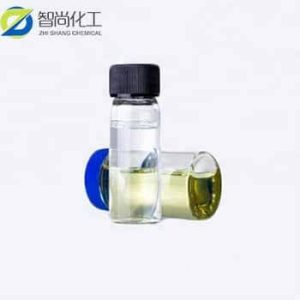
CAS 563-96-2 | Glyoxylic Acid Monohydrate
| CAS No: | 563-96-2 |
| Formula: | C2H4O4 |
| EINECS: | 679-230-4 |
| Stock Availability: | In stock |
| Brand Name: | Zhishang New Materials |
| Origin: | China |
Product Details of [Glyoxylic Acid Monohydrate]
Glyoxylic Acid Monohydrate is the most common commercial form of glyoxylic acid and is highly favored for its excellent stability. It is a white to off-white crystal or granule, effectively solving the industry problem that pure glyoxylic acid is unstable at room temperature. This transformation in physical form is a crucial step for it to move from the laboratory to large-scale industrial application.
Glyoxylic Acid Monohydrate has a wide range of applications. In the spice industry, it is the “secret weapon” of perfumers and the starting point for synthesizing many classic floral notes such as vanillin and phenylacetic acid. In the pharmaceutical field, its position is even more crucial, as it is the core “building block” for constructing many drug molecules. The familiar antibiotics such as amoxicillin and the treatment of Parkinson’s disease with levodopa cannot do without it. Not only that, it can help make the metal surface brighter in electroplating solutions, regulate the properties of plastics in polymerization reactions, and even be found as an auxiliary ingredient in some cosmetics.
Glyoxylic Acid Monohydrate’s advantage ultimately comes from its unique identity as a ‘dual functional group’. Having both aldehyde and carboxyl groups on a molecule means that it can participate in two different types of chemical reactions simultaneously, just like having a set of multifunctional tools that can more efficiently “build” various complex molecular structures. Compared to its “brother” anhydrous acetic acid, its hydrated form makes it more stable and less “delicate”, making storage and transportation much easier. In addition, with its mature production process, it can be obtained on a large scale and at low cost. For downstream manufacturers, it is undoubtedly a cost-effective choice and can be regarded as an “efficient bridge” connecting basic raw materials and high-value fine chemicals.
Related Questions:
Its most unique feature is that it contains two active functional groups, aldehyde and carboxyl, on a single molecule. This is like equipping a molecule with two different sets of tools, allowing it to play two roles simultaneously in synthetic reactions – both condensation and addition like aldehydes, and esterification and salt formation like organic acids.
Because Glyoxylic Acid Monohydrate can serve as a basic skeleton and “transform” several classic fragrances through simple chemical reactions. For example, it can react with phenol to obtain vanillin, which is the core component of vanilla flavor; Combining with catechins can produce jasmonal, which gives off the sweet cherry fragrance.
The key is to prevent moisture, avoid light, and seal. We generally recommend storing in a cool and dry place, with an ambient temperature of 15-25 degrees Celsius and a relative humidity not exceeding 65%. After opening the bottle, it should be used up as soon as possible. If it cannot be used up at once, the inner lid must be tightened because its aldehyde group is particularly prone to moisture absorption and oxidation. If left for a long time, the color will darken and the activity will decrease.
Glyoxylic Acid Monohydrate is a familiar face in the pharmaceutical industry. Our familiar amoxicillin capsules have its contribution – it is a key intermediate in the synthesis of this antibiotic. There is also levodopa, which is used to treat Parkinson’s disease, as well as some antihypertensive and cardiovascular drugs, whose molecular structures can be found to be constructed from glyoxylate fragments.
Although both are aldehydes, acetic acid hydrate has an additional carboxyl group, which makes its reaction more selective. For example, when synthesizing vanillin, using glyoxal can easily produce a bunch of impurities as by-products, but using it can accurately obtain the target product, and post-processing is much simpler. And Glyoxylic Acid Monohydrate form is more stable than anhydrous products, so there is no need to worry too much about spoilage when stored in the warehouse in summer.
In addition to regular gloves and goggles, we particularly emphasize operating in a fume hood. If it comes into contact with the skin, it will immediately cause irritation. At this time, it is necessary to immediately rinse with plenty of water for at least 15 minutes. It is recommended to quickly complete the weighing process in a dry environment to avoid absorbing moisture from the air. The lab coat should be used exclusively and should not be worn back to the office to prevent cross contamination.
Currently, the mainstream method is formaldehyde nitric acid oxidation, which is mature and cost-effective. Specifically, under specific temperature and catalyst conditions, acetaldehyde is selectively oxidized to glyoxylic acid using nitric acid, and then crystallized to obtain hydrates. Large factories generally use continuous production lines, which ensure stable quality and reduce production costs.
First of all, we need to look at the appearance. A good product should be white to slightly yellow crystals. If the color darkens, it may indicate oxidation. Then the melting point can be measured, and the pure product should melt between 48-52 ℃. Of course, the most accurate method is still liquid chromatography, and the main content should be above 99%. The key is to pay attention to whether the content of formaldehyde and oxalic acid, the two main impurities, exceeds the standard.
The Glyoxylic Acid Monohydrate of Zhishang New Materials meets international standards. If you have any other questions or would like to place an order, please feel free to contact us at any time.
API, usually referring to chemical raw materials, is the active ingredient in chemical drug formulations.
Safety Of [Glyoxylic Acid Monohydrate CAS 563-96-2]
| Hazard Codes | C,Xi |
| Risk Statements | 34-43-41 |
| Safety Statements | 26-36/37/39-45-37/39-24-27 |
| RIDADR | UN 3265 8/PG 2 |
| WGK Germany | 1 |
| RTECS | MD4550000 |
COA Of [ Glyoxylic Acid Monohydrate CAS 563-96-2 ]
You can contact us to obtain the COA and get free samples.
Contact US
Contact us for free samples of Glyoxylic Acid Monohydrate CAS 563-96-2.